

AI SEO Automation
From $49/Month
An AI SEO agent that researches keywords, writes and publishes content, fixes technical issues and builds internal links, with every change waiting for your approval before it goes live.
From $49/month when you book a demo. The same agent also runs your ads on autopilot across Google, Meta, LinkedIn, TikTok and Reddit.





How AI SEO automation works
Connect your site and search data
Hook up Google Search Console, Analytics and your CMS so Sprites sees queries, rankings, crawl coverage and which pages actually earn clicks.
Research, write and fix
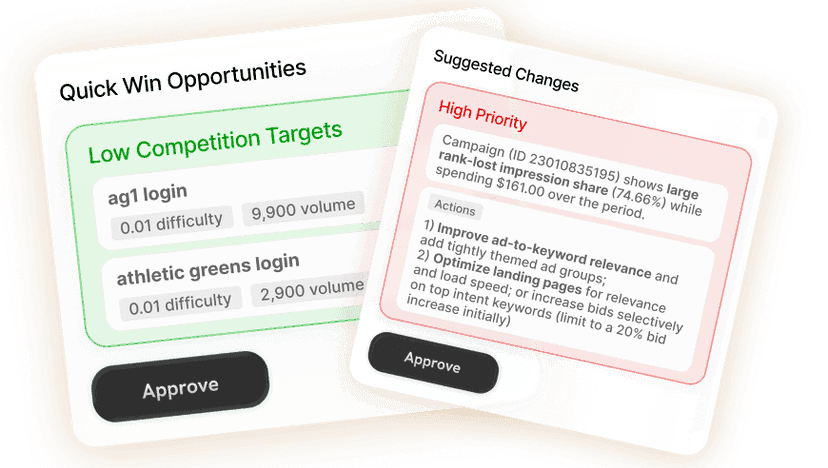
The agent clusters keywords by intent, drafts briefs and articles, runs technical audits and plans internal links, then queues each change with the reasoning behind it.
Approve, publish, monitor
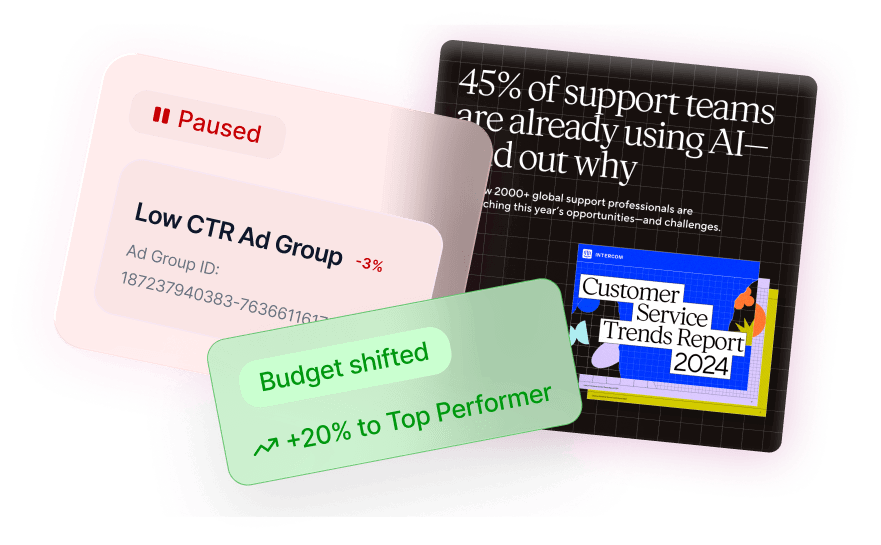
Approve changes one by one or in bulk. Sprites publishes through your CMS, watches rankings and Search Console after each release, and proposes the next round from what moved.
What AI SEO automation does
Five stages, each run by the agent and gated by your approval. The loop adapts: what monitoring finds becomes next week's research.
| Stage | What the agent does | What you get |
|---|---|---|
| Research | Pulls Search Console and keyword data, clusters demand by intent, and finds the gaps between your pages and the competitors ranking above them. | A prioritized keyword and content plan |
| Optimization | Rewrites titles, headings and body copy on priority pages, and fixes the crawl, index and schema issues the technical audit surfaced. | Page-level change sets with before and after |
| Publishing | Drafts new articles from briefs and ships approved changes through WordPress, Shopify, Webflow and other CMS connections. | Published pages, no copy and paste |
| Monitoring | Watches rankings, clicks and crawl coverage after every publish and flags the pages that lost ground. | A weekly list of what moved and why |
| Approval | Every change is queued with its reasoning. Nothing goes live until you approve it, one at a time or in bulk. | Control without the manual work |
Content & keywords
Research what your audience searches for, publish strong pages and posts, and keep content aligned with intent—so rankings compound instead of stalling after one launch.
Bulk keyword research
Surface clusters and opportunities across your niche to guide new pages and updates.
Local keyword map
Break out location-specific terms so every market gets its own clear targets.
Article writer & publisher
Draft SEO-focused articles structured for rankings, then ship them through your stack.
Technical SEO & site health
Catch crawl and index issues early, tighten on-page basics, and add structured data where it actually helps clicks—not just checklists.
Site audit
Full-site review with prioritized technical and on-page recommendations.
On-page improvements
Tune titles, headings, and content on priority URLs for clearer relevance signals.
Schema & structured data
Identify rich-result opportunities and structured data that match your page types.
Authority & strategy
Plan internal links, spot content gaps against competitors, and build a roadmap so SEO work rolls up to revenue—not isolated blog posts.
Internal linking plan
Connect supporting pages to pillars so equity flows to the URLs that matter most.
Competitor content gaps
See what rivals rank for that you do not, and queue assets to close the gap.
90-day SEO roadmap
Stack quick wins and foundational projects into a sequenced plan your team can execute.
AI SEO automation templates

SEO: Site audit
Technical and on-page review with prioritized fixes that affect crawl, index, and rankings.

SEO: Article writer & publisher
Draft SEO-strong articles and publish through your CMS workflow when you are ready.

SEO: Bulk keyword research
Map keyword clusters and intent so new and existing pages target the right demand.

SEO: Keyword research by location
Break out geo-specific demand for local, multi-market, or franchise programs.

SEO: Internal linking plan
Connect supporting pages to pillars so authority flows to the URLs that matter most.

SEO: On-page improvements
Tighten titles, headings, and body copy on priority URLs for clearer relevance signals.
Integrations

Meta Ads

Google Ads
SEO Research

YouTube


X / Twitter

Claude

OpenAI / ChatGPT

Gmail

Shopify


WordPress
Our Users Love Sprites

“Sprites made us an AI-native agency. The quality and level of work we deliver now is on a completely different tier. It's not a tool we use, it's how we operate.”

Brooks Golden
Founder · Growth Architects

“We took our ABM playbook back from two agencies and cut cost-per-lead by two-thirds in six weeks. Sprites turned our marketing into an in-house ads and content factory.”

Helghardt Avenant
Founder & CEO · Rehive

“I've already recommended it to 4–5 other founders. It freed up time for strategic work while getting us users from ChatGPT and Google Ads on autopilot.”

Jos van der Westhuizen
CEO · Coplay
Where AI SEO automation fits
SEO automation is the execution system. These pages cover the measurement side and the practice behind it.
- PillarWhat is vibe marketing?Describe the outcome, approve the plan, and AI agents run the campaign. The definition, four demonstrated workflows, the tool stack and a 7-day plan.Read
- HubAI visibilityWhether ChatGPT, Perplexity, Gemini and Google AI mention and recommend your brand, and how Sprites improves it.Read
- GuideAnswer engine optimization guideHow answer engines pick sources and the formatting that earns the citation.Read
- PricingPlans and pricingSelf-serve plans for the SEO agent on its own, or the full agent that also runs your ads on autopilot across Google, Meta, LinkedIn, TikTok and Reddit.Read
How does AI SEO automation differ from traditional SEO tools?
Traditional SEO tools surface data and leave the implementation to you. Sprites executes: it researches keywords, writes and updates content, runs technical audits, plans internal links and publishes through your CMS, with every change queued for your approval. Teams typically save 15 to 20 hours a week on the work that used to sit between the report and the site.
What is adaptive AI SEO automation?
An adaptive workflow re-plans from results instead of running a fixed checklist. After each publish, Sprites reads rankings, clicks and crawl coverage, then adjusts the next round: a page that gained goes into the internal-linking plan, a page that lost gets a rewrite, and a cluster with no traction gets a new brief. The loop tightens over time rather than repeating the same audit.
Can AI really write SEO content that ranks well?
Yes. Drafts are grounded in search intent, the pages already ranking for the query, and on-page best practices, then structured with clear headings and answer-first sections. You review the draft before it publishes, and the monitoring stage tells you within weeks whether it is earning impressions.
How quickly will I see results with AI SEO automation?
Classic SEO timelines still apply: technical fixes can show within days, many sites see meaningful ranking movement in 4 to 8 weeks depending on competition, and content and authority compound over months. What changes is throughput: the agent gets the work done in the first week instead of the first quarter.
Does AI SEO automation cover AI visibility?
They are different jobs. AI SEO automation is the execution system that researches, writes, fixes and publishes. AI visibility is the measurable outcome of whether ChatGPT, Perplexity, Gemini and Google AI answers mention your brand, and answer engine optimization (AEO) is the practice of earning those citations. Sprites measures AI visibility on its own page and free checker, and the answer engine optimization guide covers the practice. This page is about doing the SEO work.
Can I use Sprites from Claude, ChatGPT or Grok?
Yes. Sprites ships an official MCP server, so you can run the SEO agent, review its queued changes and approve them from Claude, ChatGPT, Grok or any MCP-compatible assistant, or work in the Sprites app. Either way it uses the same CMS connections and the same approval step.
Can I use this across more than one site?
Yes. The platform supports multiple domains, which is what teams running a marketing site alongside a docs or product-led signup path need. Each site gets its own keyword, content and technical priorities, and the approval queue is per site, so one site's changes never wait on another's. Grow carries three business profiles.